






Conventions for calculating linear thermal transmittance and temperature factors
BRE is an independent, research-based consultancy, testing and training organisation, operating in the built environment and associated industries.
On 3 June 2016, BRE published Conventions for calculating linear thermal transmittance and temperature factors (BR 497 2nd edition), written by Tim Ward, Graeme Hannah and Chris Sanders.
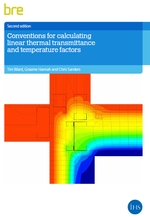
Well-insulated buildings require sophisticated techniques to model heat loss caused by thermal bridging at wall, roof and floor junctions and around openings. Thermal bridging at these junctions can add significantly to fabric heat loss and cause localised reduction in internal surface temperatures, which can lead to surface condensation and mould problems. A more detailed calculation method for U-values, as defined in BS EN ISO 6946:2007, has been introduced to take account of these repeating thermal bridges.
The BRE guide provides the information needed to carry out these calculations so that different users of the same software package or users of different software packages can obtain consistent and reproducible results. It is intended for use by designers and numerical modellers.
For building regulation purposes two key modelling outputs are identified:
These outputs enable designers to assess junction details and develop novel solutions to improve thermal performance.
The second edition of the guide has been updated to include additional junction types and information about how they should be modelled, as well as worked examples giving the determined values of linear thermal transmittance and temperature factors.
The contents of the guide are:
- Introduction.
- Numerical modelling.
- Thermal bridging at junctions.
- Junction types.
- Point thermal bridges, chi-values.
- Reporting of calculations.
- References.
- Appendix A: Detailed Input and Output from a numerical model.
- Appendix B: Worked examples with calculated values of psi and f.
[edit] Find out more
[edit] Related articles on Designing Buildings Wiki
- Air tightness in buildings.
- Cavity wall insulation.
- Computational fluid dynamics.
- Computational fluid dynamics in building design: An introduction FB 69.
- Conventions for U-value calculations (2006 edition) BR 443.
- Floor insulation.
- g-value.
- k-value.
- Heat transfer.
- Insulation specification.
- Limiting fabric parameters.
- Roof insulation.
- Solid wall insulation.
- Standard Assessment Procedure SAP.
- Thermal admittance.
- Thermal bridge.
- Thermal mass.
- Thermographic survey.
- U value.
- U-value conventions in practice: Worked examples using BR 443.
Featured articles
Check out some of the best features and news from Designing Buildings as well as key stories from around the web.

Updated supplier guide can help electrical contractors engage with NHP.

CIAT confirm the winners of the 2026 architectural technology awards.

Government launches a one stop shop for flood preparedness.

Sir Edwin Lutyens: Britain's greatest architect? Book review.

CIOB publishes free template to help assess and manage risks.
ECA's reflections on Party Conference season

Burnham wants to be confident of winning before asking for a fresh mandate.
New Chief Construction and Scientific Adviser

Sergio Cavalaro, Professor of Infrastructure Systems at Loughborough University.
Building safety levy for England

CIAT publish estimator tool for members.

Water sector faces a growing crisis that could slow the delivery of vital infrastructure.
Undervaluing our industrial past

Heritage value changes as taste for building styles changes.
Changing expectations around competence and compliance

New information sheet from CIAT.
Grenfell investigation files passed to CPS

Angela Rayner apologises on behalf of the British state.